Introduction: The Invisible Enemy in Your Bathroom
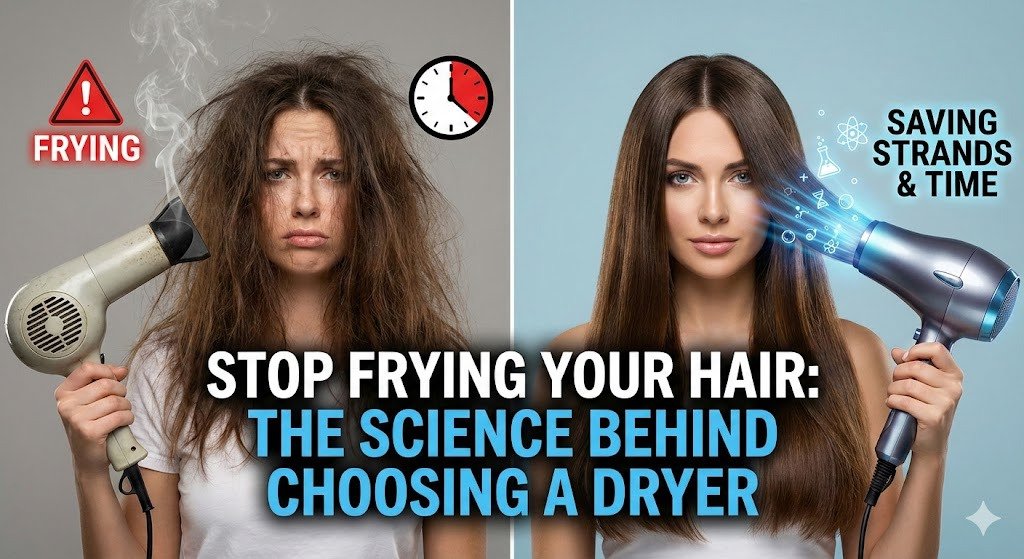
Have you ever noticed that, even when using expensive hydration masks, your hair continues to have split ends, looks dull, and suffers from chronic frizz? Often, the culprit isn’t the chemical product you are applying, but the thermal tool you use daily.
In the salon, I frequently see a phenomenon we technically call “Bubble Hair.” This occurs when a hair dryer is so hot and unregulated that the water inside the hair cortex doesn’t evaporate smoothly—it boils. This creates microscopic air bubbles inside the hair fiber, making the strand permanently fragile and brittle.
If you want to “look less tired” and achieve that salon finish, we need to talk about the hardware you are using.
Transparency Note: This article contains affiliate links. As an Amazon Associate, I earn from qualifying purchases at no extra cost to you. This helps support the blog.
The Science Behind the Solution: Airflow vs. Extreme Heat
The biggest myth in home cosmetology is that “the hotter, the better.” This is false.
For a professional, efficient drying is an equation of Airflow (Aerodynamics) + Stable Heat.
- The Physics of Evaporation: The goal is to remove water from the surface of the strand (the cuticle) without completely dehydrating the medulla and cortex (the core).
- Thermal Stability: Cheap dryers have heat spikes. They oscillate between 140°C and 180°C without control. Above 150°C, keratin (the protein that makes up your hair) begins to suffer irreversible structural damage.
- Motor Technology: Professional AC (Alternating Current) motors are heavier, but they maintain constant temperature and last 4x longer than the DC (Direct Current) motors found in drugstore dryers.
Hair Hardware: Technical Suggestions from Amazon
I have selected three tools available on Amazon (US) that pass the technical criteria for preserving hair integrity.
1. Dyson Supersonic Hair Dryer
The Thermal Engineering Revolution
This isn’t just a dryer; it’s an air processor. Dyson changed the market by moving the motor to the handle (improving ergonomics) and focusing on digital heat control.
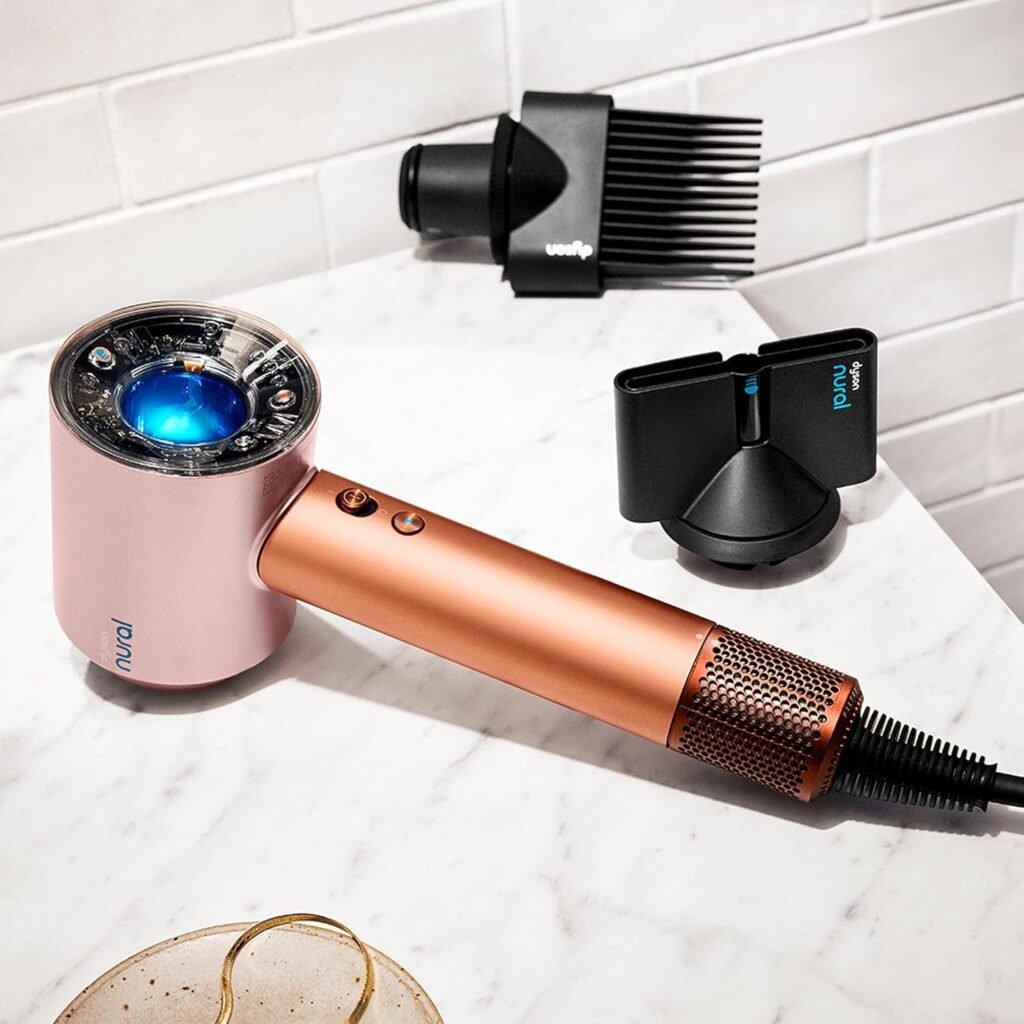
Why a Pro Uses It (The Technical Edge): The major asset here is the intelligent glass bead thermistor. It measures the airflow temperature over 40 times per second and transmits the data to a microprocessor. This ensures the air never exceeds the heat damage threshold, preserving natural shine and hair color.
What to Watch For: It uses Air Multiplier technology (a high-velocity, high-pressure jet of air). This means you don’t need to touch the nozzle to the hair. Keep a distance of 2 to 4 inches to allow the airflow to envelop the section.
2. BaBylissPRO Nano Titanium Portofino
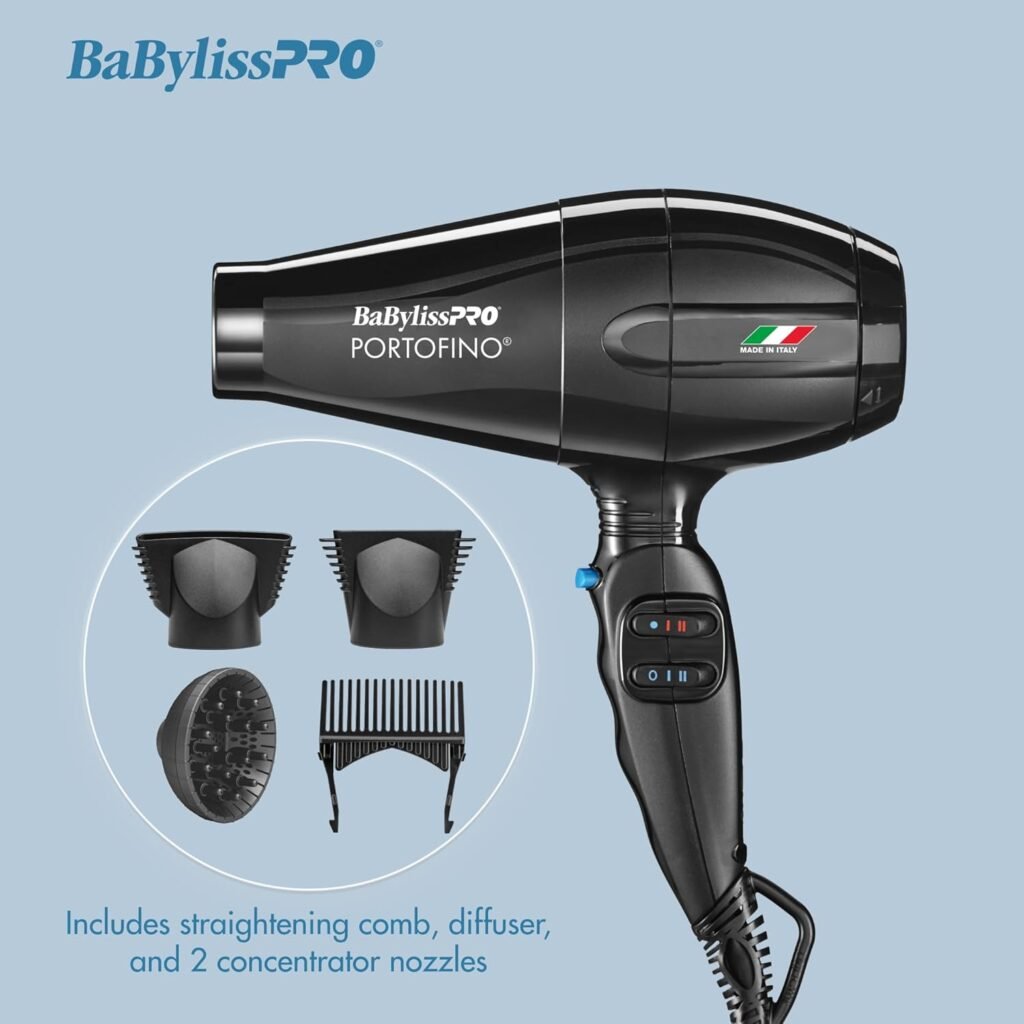
The Salon “Workhorse” If you walk into 10 luxury salons, you will likely see this dryer in 8 of them. It is the classic combination of raw power and elite conductive materials.
What to Watch For: This dryer features a high-torque Italian AC motor. It is powerful, but can be slightly heavier than common plastic models. Caution: The concentrator nozzle gets very hot due to the titanium; avoid touching it immediately after use.
Why a Pro Uses It (The Technical Edge): The grill is made of Nano Titanium. Titanium is an exceptional thermal conductor that maintains stable temperatures and emits Far-Infrared heat. This type of heat penetrates the strand from the inside out, drying faster without burning the external surface of the cuticle.
3. GHD Helios Professional Hair Dryer
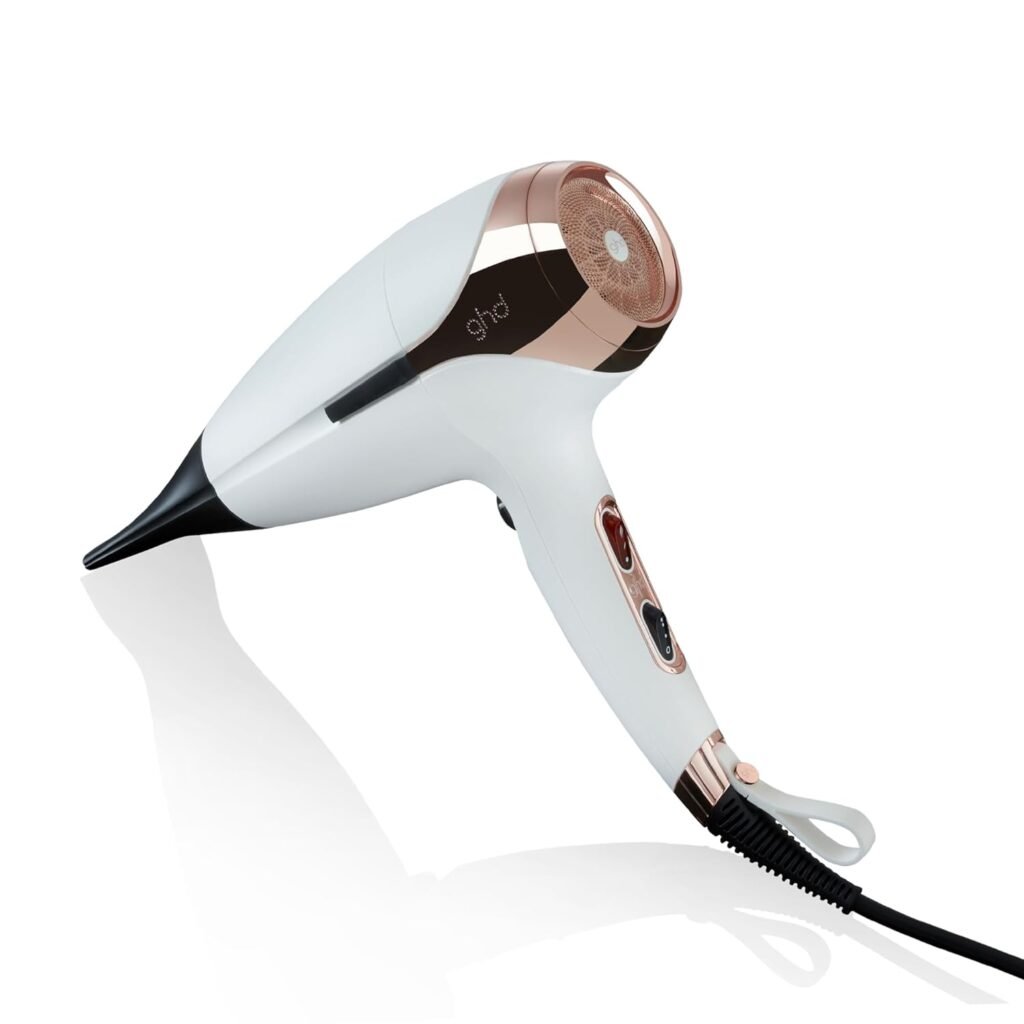
Precision Aerodynamics
GHD (Good Hair Day) is famous for their flat irons, but the Helios dryer is a masterpiece of aerodynamics.0
What to Watch For: The nozzle is contoured specifically to concentrate air. Always use it pointing downwards (from root to tip) to mechanically seal the hair scales.
Why a Pro Uses It (The Technical Edge): The focus here is on Aeroprecis technology. The internal design channels airflow at 75mph (120km/h) in a laminar fashion (without turbulence). Turbulent airflow messes up the cuticle (causing frizz); laminar flow aligns the cuticle (creating shine). It is ideal for those seeking that mirror-like smooth finish.
The Expert’s Corner
The Myth and Truth About Negative Ions
You see “Ionic Technology” on every box, but do you know what it chemically does to your hair?
Water on wet hair ($H_2O$) carries a positive electrical charge. Ionic dryers emit negative ions.
When negative ions hit the positively charged water droplets, they break the water molecule into much smaller micro-particles (atomization).
- The Result: Water evaporates much faster (less heat time on the strand) and static charge is neutralized, eliminating that post-drying “flyaway” effect.
- Pro Tip: If you want volume at the root, turn off the ionic function (if the dryer allows). If you want sleekness and shine, turn it on to the max.
Conclusion: Invest in the Tool, Save on the Treatment
A good dryer is a long-term investment in your hair’s health. Spending a fortune on oils and masks while using an unstable dryer that “cooks” your strands is counterproductive.
The models mentioned above (Dyson, BaByliss, and GHD) offer the thermal safety that we, as professionals, demand.
Ready for the upgrade? Check current prices and availability for these models directly on Amazon USA via the links below and transform your care routine.